
InAppStory’s 2025: What We Built, What Changed, What’s Next
Our 2025 in numbers and launches: 45B story views, 600 studio stories, 23 games including custom, plus InAppStory 2.0 with in-app banners and messaging.
December 28, 2025•10min

Share the article


Karina
Author @ InAppStory
InAppStory was founded in 2021 to solve a problem that most mobile teams eventually face.
As apps grow, communication inside the product becomes continuous. New features need explanation. Rules change. Onboarding stretches beyond the first session. Push notifications become overloaded. The main screen turns into a battlefield of priorities.
At that point, teams are no longer choosing formats. They are trying to regain control over how communication happens inside the app. That is the problem InAppStory was built to address.
InAppStory is neither a marketing channel, nor a single format like stories or banners. InAppStory is a managed communication layer inside mobile apps, designed for moments when communication becomes operational rather than occasional.

Teams use it to:
Over time, these local, in-app scenarios start to overcome much larger challenges.
In fintech apps, teams use InAppStory to roll out new features safely, test changes on real users, reduce pressure on support, and gradually move toward daily usage instead of episodic visits.
In retail and e-commerce apps, it helps turn the app into a working sales channel: activating offers, increasing basket size, bringing users back in-store, and making partner placements measurable.
Across industries, InAppStory is associated with higher DAU/MAU, stronger feature adoption, improved LTV and AOV, higher conversion rates of in-app offers, better ROMI of in-app campaigns, and lower pressure on support measured through contact rate and time-to-resolution.
InAppStory started with one format: in-app stories. But clients quickly began using it for much more than campaigns. Stories were used for onboarding, feature launches, education, service messages, and internal experiments. The pattern was clear: teams needed one place to manage all in-app communication.

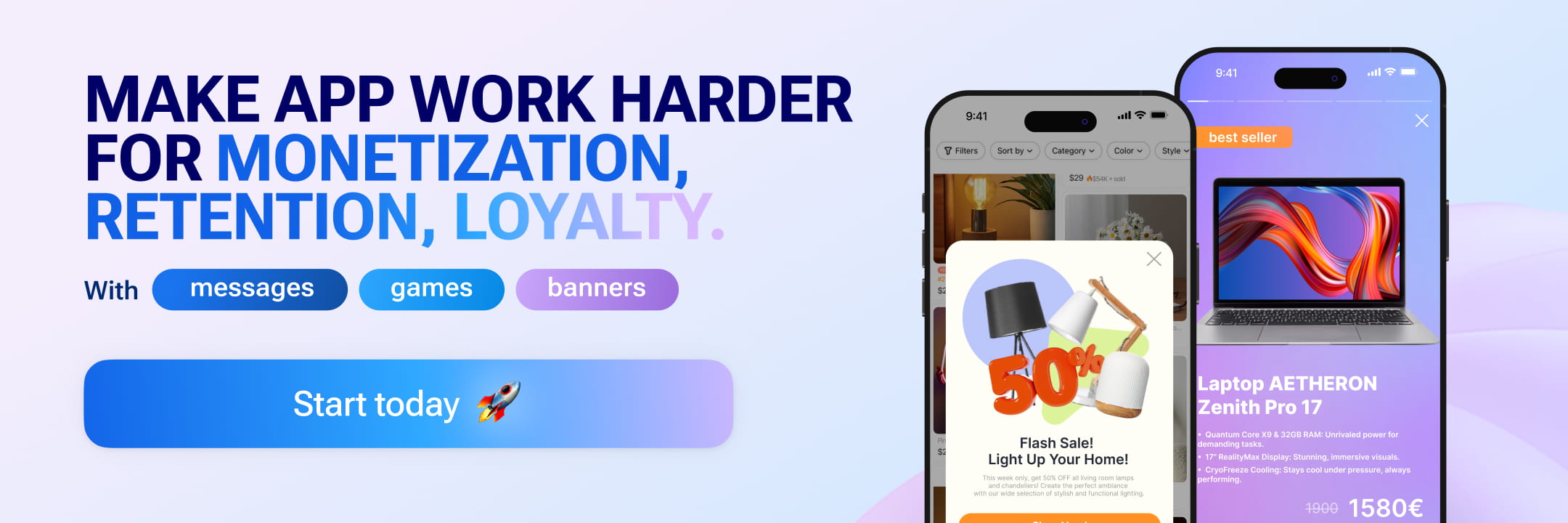
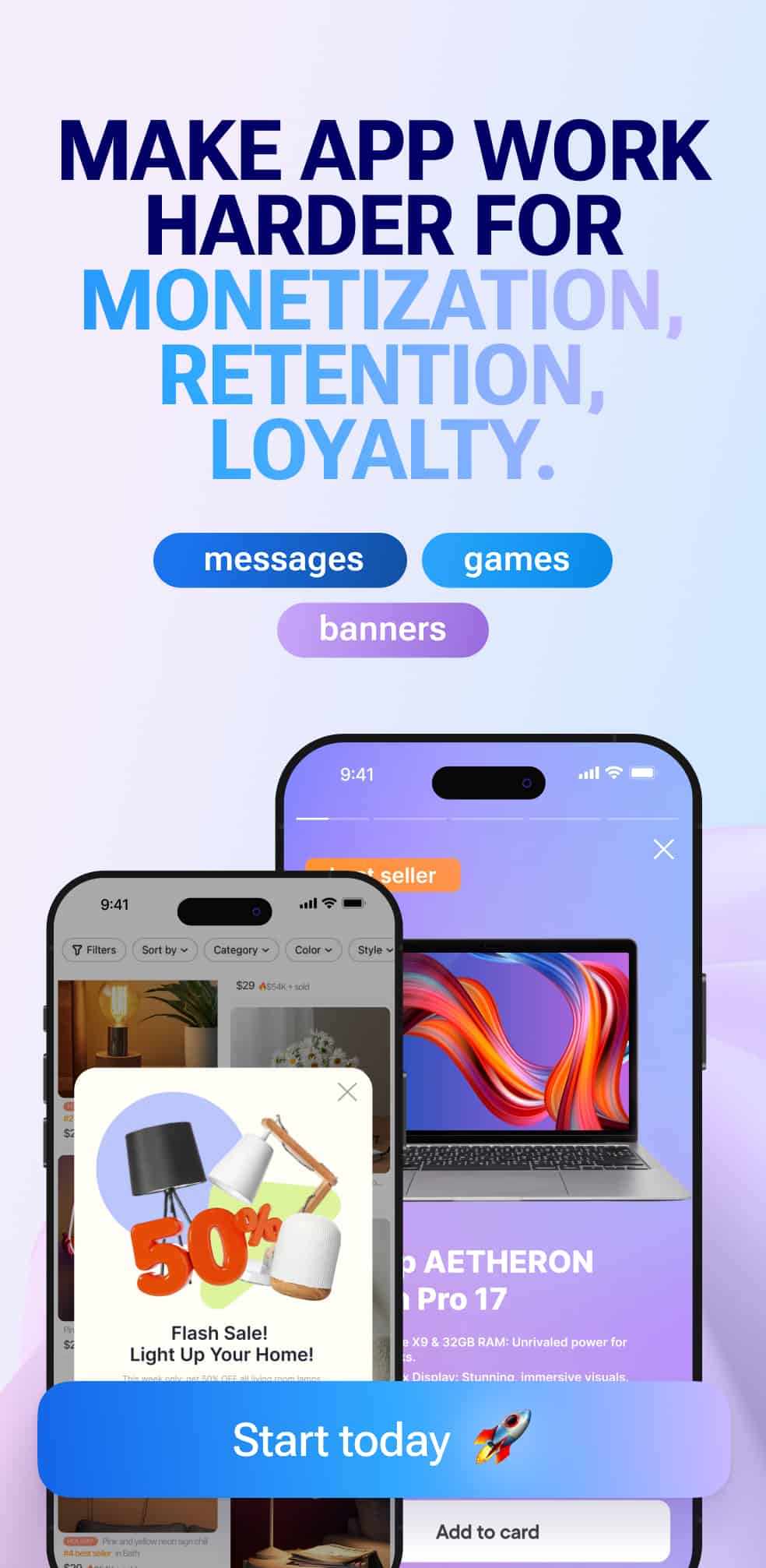
This insight shaped InAppStory 2.0. Today, the platform brings together:
All formats are managed from one dashboard and follow the same logic of targeting, timing, and control.

InAppStory is built by product managers, engineers, designers, and content specialists who work daily with real mobile apps.
We design, ship, and support the platform together, staying close to client use cases and real constraints.

Clients do not choose InAppStory because of features like stories, games, or banners.
They choose it because it gives them:

InAppStory is rarely perceived as a “marketing tool.” In most companies, it sits between product, marketing, and business teams.
✅Product owners use it to onboard users and explain functionality.
✅CRM and loyalty teams operate it daily.
✅Commercial teams rely on it to guide users to actions.
✅Compliance teams approve it because of its role-based access and control.
Importantly, sales impact is often a side effect. While control and reliability matter, growth metrics matter too.
As products become more complex, InAppStory’s role shifts from growth acceleration to complexity management.
Create interactive in-app experiences that help users explore features, understand value, and take action. Build in-app messages, stories and games without code to influence key product and revenue metrics.

Read also


.jpg?2026-02-16T15:45:09.402Z)